When replacing a fire-rated downlight, it’s not just about swapping one fixture for another. Your ceiling's fire integrity, certification status, and regulatory compliance all hang in the balance. This guide simplifies the entire process by:
-
Explaining what makes fire-rated downlights unique
-
Highlighting the essential standards and regulations involved
-
Showing how to maintain ceiling fire integrity and restore protection
-
Detailing installation methods to preserve your safety certifications
-
Recommending certified products and best practices from trusted sources
Whether you're a homeowner, developer, or qualified electrician, this article ensures you're equipped to replace recessed lighting without compromising compliance.
Understanding the Role of Fire-Rated Downlights
Unlike standard fittings, fire-rated downlights are engineered to preserve your ceiling's structural fire barrier. When recessed into plasterboard or timber joist ceilings, these fixtures fill the hole with an intumescent material that expands during a fire, helping delay the spread of flames.
Without them, your ceiling can become a weak point in fire compartmentalisation, undermining fire safety goals. If your building falls under Building Regulations Part B, it’s likely required that your lighting solutions offer a specific fire rating (typically 30, 60, 90, or even 120 minutes).
For context, our Fire Rated Pot Light collection includes luminaires rigorously tested to uphold fire resistance up to 2 hours. These aren’t just lights—they’re certified safeguards.
“Replacing a downlight? If it’s fire-rated, your new installation must meet or exceed the original fire integrity, or you risk invalidating your electrical safety certificate.”
Key Standards and Certification Considerations
When evaluating a replacement, always review the standards the product conforms to. You should see markings such as:
-
BS EN 60598-2-2 – safety of recessed luminaires
-
BS476-21 / BS EN 1365-2 – fire resistance of structural elements
-
UL263 / UKCA / CE compliance markings
For instance, our 3-Inch LED Fire Rated Pot Light is UL263 certified with a 2-hour rating. Choosing fixtures like this ensures compatibility with most UK and North American compliance requirements.
Additionally, any replacement must support the same or better fire integrity restoration methods used in the original installation. Skipping this could result in a breach of your EICR.
Planning the Replacement: Safety First
Before removing the existing fitting, perform a thorough risk assessment. Consider:
-
Ceiling type: Is it plasterboard, timber joist, or concrete? Different materials demand specific fire-rated solutions.
-
Installation environment: Wet areas may require IP-rated and IC-rated luminaires.
-
Thermal insulation: Ensure fixtures allow for safe insulation contact or use a fire hood or support box to shield components.
Once assessed, gather your tools, test the power source, and check if you need new installation documentation to update your building compliance file.
If in doubt, hire a qualified electrician to handle the installation. They’ll also help complete your post-installation electrical safety certification.
One excellent option for larger cut-outs is the 6-Inch LED Fire Rated Pot Light, which balances performance with certification peace of mind.
Removing the Old Fixture
Once safety checks are complete, you can begin removing the old downlight. Ensure the power is off, and carefully detach the fixture from the ceiling cut-out. If any damage has occurred to the ceiling’s structural barrier, this must be addressed before installing the new fitting.
Tips for safe removal:
-
Note the existing cut-out size and wiring configuration.
-
Check for any signs of previous heat damage or moisture ingress.
-
Identify whether a fire hood or extra fire-stop materials (like collars or mastic) were originally used.
If the ceiling hole appears compromised, now is the time to patch and reseal it before the new light goes in. This is critical for hole restoration and maintaining fire containment.
Choosing a Certified Replacement Product
Your new downlight must match or exceed the previous fixture's fire protection level. Look for:
-
Clear fire ratings (e.g., 2-hour certified)
-
Certification markings from ETL, CE, or UKCA
-
Compatibility with your ceiling type and insulation conditions
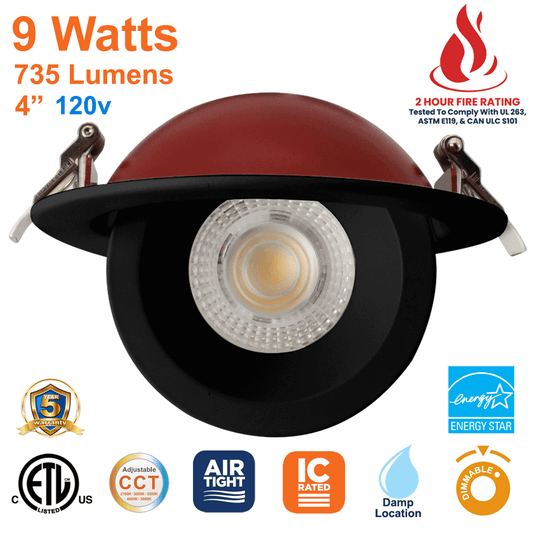
LED fire-rated downlights offer excellent efficiency, safety, and long-term durability. Our 4-Inch Fire Rated Pot Light is a standout choice—ideal for both new builds and retrofit upgrades.
It features:
-
A selectable CCT range (2700K to 5000K)
-
Wet rating for versatility
-
High lumen output with low wattage
-
Full IC rating for direct contact with insulation
By choosing a well-documented, manufacturer-certified downlight, you safeguard against insurance implications and failed inspections.
Final Steps to Keep Your Certification
After installation, a few final measures ensure you maintain full compliance:
-
Complete installation documentation: Include part numbers, certification marks, and test data.
-
Conduct a fire safety inspection: Hire a licensed inspector if needed, especially for large-scale replacements.
-
Update your EICR: Any new fixture, especially in regulated buildings, may impact your report’s status.
-
Keep manufacturer datasheets: These serve as proof of compliance for insurance and regulatory checks.
You should also document the use of any additional fire-stop products (hoods, collars, sealants). These may be required for an acoustic rating or to meet specific Part P or Part B building codes.
Conclusion: Protecting More Than Just Light
Replacing a downlight might seem like a simple task, but when it comes to fire-rated downlights, there is far more at stake. You’re not only restoring light—you’re reinstating your building’s fire safety line of defense.
Ensure that every replacement supports fire integrity restoration, aligns with applicable standards, and is handled by a competent person.
For long-lasting, regulation-compliant lighting that doesn't compromise on performance, explore our full range at LEDNetwork.ca.
Stay compliant. Stay protected. Stay lit.
Frequently Asked Questions (FAQ)
1. Do all ceilings require fire-rated downlights? No, only ceilings that are part of a fire compartment or those needing to meet Building Regulations Part B typically require them. Check your local codes or consult a professional.
2. Can I replace a fire-rated downlight with a standard one? Not if the original fixture was required to maintain ceiling fire integrity. Doing so may void certifications and insurance coverage.
3. How do I know if my current downlight is fire-rated? Check the product label for fire rating certifications like UL263 or BS476-21. If unsure, consult the manufacturer or a qualified electrician.
4. Are there different types of intumescent materials used in fire-rated downlights? Yes. Some use pads, others use coatings or built-in barriers. Their goal is to seal the opening during high temperatures.
5. Do I need to notify building control after replacing fire-rated lights? If your installation affects fire compartmentation or requires compliance documentation, it may need to be reported. Always check with local authorities.
6. What happens if I can't find the exact size as the old fixture? Use a suitable patching method to restore the ceiling structure, then install a new certified fitting with the appropriate fire rating.
7. Is there a fire-rated option for every size of pot light? Yes. Sizes from 2" to 6" are commonly available. LED Network stocks a variety of fire-rated options suitable for most installations.
8. Are fire-rated downlights safe to use with insulation? Only if they are IC-rated. Otherwise, you must use insulation guards or fire hoods to prevent overheating.
9. Can I use fire-rated downlights in wet areas like bathrooms? Yes, as long as they have the appropriate IP rating (e.g., IP65 or higher).
10. Will replacing a single light affect my entire EICR report? It might, especially if the replacement doesn't match safety requirements. Use certified fixtures and keep documentation to avoid issues.