Fire rated downlights are a vital safety feature in modern residential and commercial lighting, but they’re not immune to failure—particularly from overheating. This article explores what causes overheating in fire rated downlights, how to diagnose the early warning signs, and the best fixes to prevent fire risks and lighting failures. We'll explain how elements like poor thermal management, trapped heat, and improper insulation handling can lead to serious issues like scorched fittings or early lamp failure. You'll also learn how to future-proof your lighting with IC-rated downlights, smart installation practices, and other expert-level insights. Whether you're a homeowner upgrading your fixtures or a contractor working on retrofits, this guide offers the critical knowledge you need to ensure safe and long-lasting lighting solutions.
Why Are Fire Rated Downlights Still Overheating?
Fire rated downlights are engineered to resist flame spread during a fire, typically providing up to 2 hours of protection depending on their rating. However, this structural resilience doesn't prevent overheating from environmental or electrical stressors.
Here’s the twist: while these fixtures are built to slow down a fire, they can become a fire hazard themselves if installed incorrectly or combined with insulation that traps heat around the fitting.
What Causes Overheating in Fire Rated Downlights?
Even the most rigorously tested lighting systems can fail if not used in the right conditions. Overheating downlights usually come down to one or more of the following issues:
Common Causes of Overheating
- Poor thermal management: Downlights require efficient heat dissipation systems. When these fail or are blocked, internal temperatures rise.
- Inadequate ventilation: Placing downlights in tightly sealed ceiling cavities or without air circulation traps heat that should be dispersed.
- Trapped heat from loft insulation: A frequent and overlooked cause. Installing insulation over non-IC-rated fixtures can suffocate them.
- Electrical current issues: Overdriving LEDs with too much current stresses the components and generates excess heat.
- Ambient temperature: High surrounding temperatures (like in lofts or upper floors) can push downlights beyond their thermal limits.
- Improper installation: Missing spacers, using incompatible drivers, or ignoring manufacturer specifications often leads to rapid failure.
- Design flaws in older fixtures: Many older models lack modern thermal protection or compatibility with energy-efficient retrofits.
“Even fire-rated lights can’t defy the laws of thermodynamics. If you don’t manage heat, you’re creating a ticking time bomb in your ceiling.”
Early Symptoms: How to Diagnose Overheating Issues
Catching the warning signs early can prevent catastrophic damage—not just to your lighting but your entire property. Here are key symptoms that your fire rated downlights may be overheating:
Visible and Hidden Red Flags
- Flickering LEDs, especially during warm-up or after extended use.
- Warm ceiling patches above or around fittings—an unmistakable indicator of trapped heat.
- Discoloured ceiling areas or scorched fittings, which may suggest insulation is too close or internal components are degrading.
- Buzzing or humming drivers, usually a symptom of electrical stress or thermal fatigue.
- Early lamp failure, even when using long-life LEDs.
- Burning smells coming from ceiling voids.
- Nuisance tripping at the fuse board or breaker—often the result of cumulative overheating affecting wiring insulation.
- Reduced lumen output or noticeable colour temperature shift.
These signs are especially common in older homes or during renovations where loft insulation was added after lighting installations.
Why IC-Rated Downlights Are the Gold Standard
If you’re still using older halogen or early-generation LED downlights, it’s time to seriously consider upgrading. IC-rated downlights (Insulation Contact-rated) are designed specifically to operate safely in contact with insulation, eliminating the trapped heat issue.
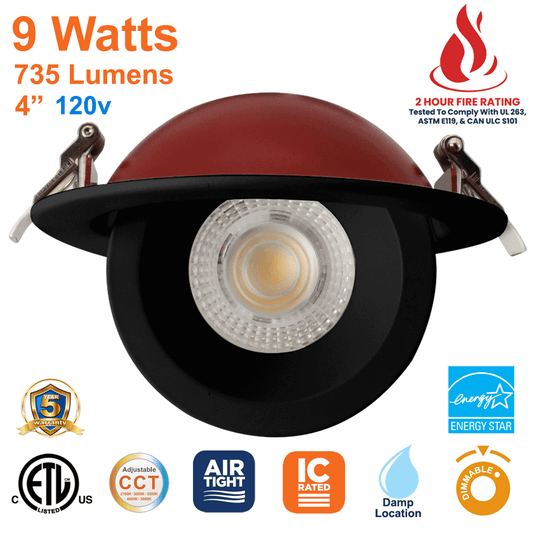
At LED Network, we specialise in fire rated lighting that doesn't compromise on safety or performance. One standout product is our 4-inch Fire Rated Pot Light, offering:
- A 2-hour fire rating
- 5CCT selectable colour temperatures
- IC and wet rated certification
- Excellent heat dissipation properties
By combining fire safety with passive cooling technologies and modern heatsink design, these units are built to perform reliably in real-world conditions, even with insulation overhead.
When Insulation Goes Wrong: A Closer Look at the Problem
It’s easy to underestimate how much loft insulation has evolved. Modern insulation is thicker and more energy-efficient—but also more dangerous when combined with the wrong lighting.
Many homeowners and contractors don’t realise that “fire rated” doesn’t mean “safe to cover with insulation.” That distinction belongs only to IC-rated downlights.
For instance, if you've added insulation to your attic or completed a loft conversion, it's essential to verify that your existing downlights are compliant. Otherwise, you're unintentionally creating a thermal envelope that traps heat and can degrade both the light fitting and surrounding wiring.
To protect your fixtures and home, consider switching to newer models like our 3-inch Fire Rated Pot Light, which is fully tested for UL263 fire safety and built with efficient heat dissipation in mind.
Practical Inspection: What Professionals Check
Whether you’re a property owner or an installer, here’s a checklist of what should be assessed during an overheating downlight inspection:
- Clearance around fittings: Is insulation directly in contact? Are loft caps missing?
- Driver performance and placement: Is the driver buzzing, discoloured, or warm to the touch?
- Ceiling temperature changes: Are certain patches warmer than others?
- Circuit performance: Is the circuit breaker frequently tripping? Is there voltage imbalance?
- Visual inspection: Look for discolouration, soot, or burnt smell around the fixture.
- Fire hazard mitigation: Are you using compliant, IC-rated fixtures in insulated areas?
If you’re upgrading older fixtures, browse our complete range of fire rated pot lights to find units designed with modern insulation compatibility, low-profile housing, and thermal safety in mind.
Proven Fixes for Overheating Downlights
Once overheating is identified—either through visual cues, performance issues, or professional inspection—it’s critical to act fast. Heat damage isn’t just bad for your fixtures; it can compromise your electrical system, insulation, and even your home’s structural safety.
Here’s how to fix and future-proof the issue:
1. Switch to IC-Rated and Insulation-Safe Downlights
The number one fix? Upgrade to IC-rated downlights that are built for insulation contact. These units are thermally engineered to handle the conditions that cause standard downlights to overheat.
For example, our 6-inch Fire Rated Pot Light includes:
- 2-hour UL fire rating
- IC and wet location certification
- Selectable 5CCT light colours
- Up to 1100 lumens of high-performance lighting
These fixtures combine both fire protection and thermal cutoff safety, making them ideal for homes with modern insulation.
2. Install Loft Caps (When Needed)
In situations where upgrading every fitting isn’t feasible, loft caps (also known as insulation guards) can provide an interim solution. These dome-shaped covers create an air gap between the insulation and the downlight, allowing heat to escape naturally.
However, keep in mind:
Loft caps are a band-aid, not a cure. They don’t replace the safety and efficiency of properly rated, modern IC fixtures.
3. Use Proper Heatsink Design and LED Drivers
Thermal management begins with components. Ensure your LED drivers and heatsinks are designed for:
- Passive cooling
- High thermal conductivity
- Maximum heat dissipation
Older or cheap drivers often lack the thermal capacity to support high-efficiency LEDs in enclosed spaces. Replacing them with units engineered for electrical load balancing and overheating resistance is key to long-term safety.
At LED Network, all fire rated products are paired with driver systems that prioritize performance and protection, backed by certified thermal cutoffs to prevent runaway temperatures.
4. Evaluate and Modify Insulation Strategy
If you're working on a retrofit, home extension, or loft conversion, it’s critical to align your insulation plan with your lighting design. That means:
- Cutting insulation back from non-IC rated fixtures
- Replacing outdated fittings
- Using building insulation compatibility charts to guide placement
- Conducting a loft safety inspection to ensure there’s no trapped heat
Too often, energy efficiency upgrades like added insulation are completed without revisiting recessed lighting, creating a hidden hazard.
5. Upgrade Your Lighting Layout
Many older lighting layouts simply weren’t designed for modern energy use or safety expectations. If you’re installing new drywall or renovating a space, it’s a great opportunity to:
- Re-space downlights for even heat distribution
- Add ventilation grilles or airflow points
- Consolidate circuits to reduce circuit overload
This is especially important in large rooms or open-plan living areas where multiple downlights may be installed in tight clusters.
Want inspiration? Browse our full fire rated lighting collection for design-forward, code-compliant downlights suitable for both residential and commercial applications.
Aligning with Building Regulations and Safety Standards
In Canada and across the UK and Europe, building codes are constantly evolving to account for energy efficiency and fire safety. Fire rated downlights are often required by code when penetrating fire-resistant ceilings, especially in:
- Multi-storey homes
- Apartment buildings
- Garages and basements
- Extensions or loft conversions
While “Part B” and “Part L” of the UK Building Regulations address fire resistance and energy efficiency respectively, their spirit is echoed in Canadian building codes that emphasize recessed lighting safety and insulation compatibility.
Staying compliant isn’t just about checking a box—it’s about protecting lives and property. Every fixture sold at LED Network is designed with compliance and testing in mind, offering customers peace of mind with certifications from ETL, UL263, and cETL.
The Long-Term Fix: Upgrade + Inspect
The most reliable way to protect your home or project from overheating is with a two-pronged approach:
- Upgrade to compliant, insulation-safe fire rated downlights
- Schedule regular inspections of wiring, insulation layout, and fixture condition
Even the best product can’t overcome poor installation. That’s why we recommend pairing every product upgrade with a full thermal protection assessment—whether you’re a homeowner or electrical contractor.
Need a reliable, all-in-one fixture? Check out our best-selling 4-inch IC-rated pot light—an energy-efficient powerhouse engineered for tough conditions.
Size Matters: Choosing Between 3-Inch, 4-Inch, and 6-Inch Downlights
The size of your fire rated downlight isn’t just about aesthetics—it directly affects heat dissipation, coverage, and installation depth. Let’s break it down:
3-Inch Downlights
Ideal for smaller rooms, bathrooms, or accent lighting, like our 3-inch Fire Rated Pot Light
- Compact design fits in tight ceiling voids
- Lower wattage = lower heat output
- Excellent for task lighting and narrow beam spreads
- Still fire rated and IC-compatible
Best for: Bathrooms, hallways, soffits, or ceiling areas with limited clearance.
4-Inch Downlights
A balanced choice for most residential applications. Our 4-inch LED model is:
- High-lumen (800+ lumens) and dimmable
- Selectable colour temperatures
- Slim and low-profile for modern ceilings
Best for: Kitchens, bedrooms, living rooms, and general-purpose lighting.
6-Inch Downlights
The go-to for larger rooms and higher ceilings. Our 6-inch fire rated downlight offers:
- 1100 lumens of bright, efficient output
- Increased surface area = improved passive cooling
- Robust design suited for commercial or larger residential projects
Best for: Open-plan living areas, basements, retail, or office spaces.
Retrofits vs New Builds: What You Need to Know
Retrofitting Existing Homes
Retrofitting is common in older properties where insulation upgrades and lighting renovations are completed in stages. Key considerations include:
- Check insulation type and depth: Modern insulation is thicker and denser, trapping more heat.
- Inspect existing wiring and drivers: Older wiring may not be rated for new LED loads.
- Use fire rated, IC-rated models: Avoid mixing modern insulation with non-IC fixtures.
In retrofit projects, it’s crucial to balance safety, ease of installation, and ceiling cut-out dimensions. Many of our pot lights at LED Network are designed to fit standard retrofit housings and feature quick-connect wiring to streamline installation.
New Builds
New constructions give you more control:
- Plan insulation and lighting concurrently: Prevent conflict between building envelope and light fixtures.
- Design for even heat dissipation: Use spacing guides and install ventilation grilles where needed.
- Meet local fire safety and energy efficiency codes: Our full collection of fire rated downlights is UL and ETL tested for code compliance.
Troubleshooting Persistent Performance Issues
Sometimes, even with upgraded fixtures, problems persist. Here’s a brief troubleshooting guide to common issues:
Problem: Flickering Lights
- Likely Cause: Incompatible dimmer switches, voltage drops, or driver issues.
- Fix: Use LED-compatible dimmers; replace the driver if signs of heat damage are present.
Problem: Buzzing or Humming
- Likely Cause: Overdriven driver, electromagnetic interference, or overheating.
- Fix: Check driver compatibility, wiring quality, and ensure proper thermal contact.
Problem: Colour Temperature Shift
- Likely Cause: Phosphor layer degradation from excessive heat.
- Fix: Upgrade to downlights with integrated thermal protection mechanisms and passive cooling features.
Problem: Frequent Tripping at the Breaker
- Likely Cause: Cumulative thermal damage to wiring or circuit overload.
- Fix: Perform a full electrical load analysis and consider redistributing circuits or adding surge protection.
Final Thoughts: Light Safely, Light Intelligently
Fire rated downlights are a key element of a safe and energy-efficient lighting system—but only when used properly. Whether you're retrofitting an older property or designing a code-compliant new build, understanding the relationship between heat, insulation, and LED technology is critical.
At LED Network, we design and manufacture premium, fire-rated, IC-rated downlights made for the challenges of Canadian homes. With options in 3-inch, 4-inch, and 6-inch sizes, and features like 5CCT selectability, thermal cutoff protection, and wet location ratings, our products are built for performance and peace of mind.
Frequently Asked Questions
About Overheating Fire Rated Downlights: Causes, Diagnosis and Fixes
1. Can overheating downlights cause permanent damage to ceiling structures?
Yes. Prolonged exposure to trapped heat can cause scorching, warping, and degradation of ceiling materials such as plasterboard or drywall. This damage not only affects aesthetics but can compromise fire resistance, especially if the ceiling is a fire-rated barrier.
2. Is it safe to install fire rated downlights in insulated vaulted ceilings?
Only if the fixtures are IC-rated. Vaulted ceilings with insulation packed around the joists can trap heat more aggressively than flat ceilings. Always choose IC-rated, fire-rated downlights with proper ventilation or use loft caps where IC models aren’t viable.
3. How does room humidity affect overheating in fire rated downlights?
High humidity doesn’t directly cause overheating, but it can impact electrical performance and reduce heat sink efficiency by accelerating corrosion or condensation around metal components. It’s crucial to use wet-rated fixtures in high-humidity areas like bathrooms or kitchens.
4. What is the typical lifespan of a fire rated downlight before overheating becomes a risk?
There’s no fixed number, but poorly installed or non-IC-rated downlights can develop overheating issues within 2–5 years, especially in insulated ceilings. Properly rated and installed units can last 10+ years with minimal degradation.
5. Can dimmer switches cause overheating in downlights?
Yes, if incompatible. Non-LED-compatible dimmers or overloaded dimmer circuits can cause excessive current draw or inconsistent voltage, leading to heat build-up in drivers or LED modules. Always pair downlights with compatible dimmers.
6. How do I know if a downlight has built-in thermal cutoff protection?
Check the manufacturer’s technical specifications. Products with thermal cutoff features typically include sensors that shut down the unit if a critical temperature is reached, protecting both the light and surrounding materials.
7. Can you retrofit an existing fire rated downlight to make it insulation safe?
Not reliably. Most non-IC-rated downlights cannot be upgraded to be safe under insulation. While accessories like loft caps can help, it’s often more cost-effective and safer to replace the unit entirely with a certified IC-rated model.
8. What’s the difference between fire rated and regular downlights in overheating scenarios?
Fire rated downlights are designed to maintain the ceiling's fire resistance, but they are not inherently safer from overheating unless also IC-rated. Regular downlights may lack the structural integrity and safety features to resist both heat buildup and fire.
9. Can dust accumulation around the fitting increase overheating risk?
Yes. Dust, insulation fibers, and debris can clog ventilation gaps, block passive cooling, and insulate the unit, leading to faster heat buildup. Periodic inspection and light cleaning are essential, especially in attics or lofts.
10. Is it necessary to install a fire hood over fire rated downlights?
Only in specific cases. If your fire rated downlight is not fully sealed or not IC-rated, or if it’s installed in a timber-framed ceiling, a fire hood may be required to meet local building codes or Part B compliance. Most modern IC fire rated fixtures (like those at LED Network) do not require additional hoods.