If you’re renovating, retrofitting, or building new, and your ceiling includes recessed lighting—this article could be critical to your fire safety strategy. Below, you'll learn exactly what intumescent downlight covers are, how they function during a fire, when and where they’re required by regulation, and why they’re essential for both energy efficiency and fire resistance. We’ll also explore how to select the right cover, what kind of lights they work with, and what pitfalls to avoid when planning insulation around lighting. Everything here is framed with practical tips and clear terminology for homeowners, builders, and electricians alike.
The Invisible Shield: What Are Intumescent Downlight Covers?
When you look up at a modern, minimalist ceiling, the tiny, low-profile lights dotted across the plasterboard might seem harmless. But behind each recessed light lies a hole—a break in your fire barrier.
This is where an intumescent downlight cover steps in.
These fire-rated enclosures are designed to cover the top of recessed lighting fixtures. Built using intumescent material, they expand when exposed to heat, sealing off the hole and helping maintain the fire integrity ceiling rating. In a fire scenario, these covers can delay the spread of flames and smoke long enough to save lives—and structures.
The concept is simple, but the science is powerful: the cover’s passive fire protection properties activate under heat stress, creating an airtight barrier that stops fire from reaching combustible materials like wooden joists or insulation.
“Without a downlight fire protection system in place, a ceiling full of pot lights becomes a series of built-in fire escape routes—for the fire.”
Why You Need Fire Protection Above Recessed Lighting
Let’s get one thing out of the way: recessed lighting (or pot lights) requires cutting into your ceiling. This penetration might seem minor, but it compromises the entire fire-resistant surface of the ceiling. You’ve essentially created a weak point in the building’s fire defense system.
If you’re using IC-rated lights, they’re designed to be in contact with insulation—but they don’t necessarily come with fire resistance. That’s why fire-rated downlights and compatible downlight insulation covers are critical.
The goal isn’t just to block flames, but to maintain:
-
Smoke containment / fire compartmentalisation
-
Plasterboard penetration protection
-
Energy efficiency improvement (by eliminating air leakage prevention gaps)
For this reason, many jurisdictions (including Canada and the UK) reference Part B and Part L regulations in the building code, requiring ceiling breaches to be sealed with tested fire-resistant materials.
When to Use Intumescent Covers: It's All About the Structure
You don’t need an intumescent cover in every single application—but if your recessed lighting is installed in a ceiling that separates living spaces, particularly floors of a multi-story home or commercial property, then it’s time to take fire seriously.
Use an intumescent hood in these scenarios:
-
Between floors of a house, especially where loft insulation is present.
-
In multi-family dwellings or duplexes where one ceiling is another unit’s floor.
-
Above commercial or hospitality spaces where fire codes are strict.
-
In bathrooms or kitchens, where moisture barriers and fire safety need to work together.
-
When retrofitting fire covers during upgrades or insulation updates.
👉 If you're looking for fully integrated, fire-rated lighting options, browse our Fire-Rated Pot Lights Collection for compliant and tested solutions that combine lighting performance with fire safety.
What Makes a Cover "Fire Rated"?
This is where many people get confused: fire-rated isn’t just marketing speak—it’s an actual certification backed by testing.
An intumescent downlight cover is typically rated to withstand fire for a set period—30, 60, 90, or even 120 minutes, depending on the cover and ceiling type. For instance:
-
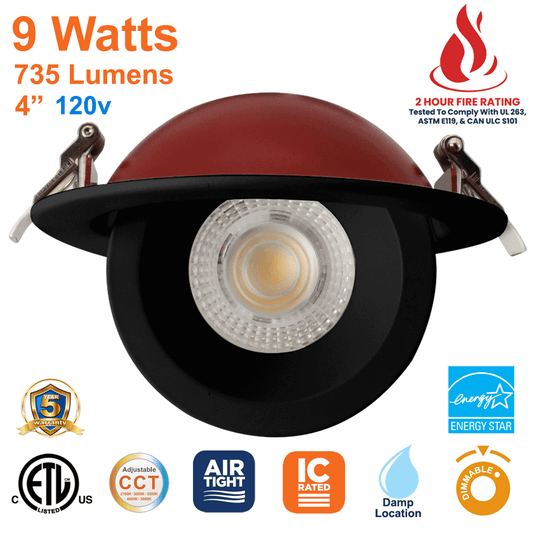
This 4-Inch Fire-Rated Pot Light (2-Hour Rated) from LED Network offers a built-in solution with CE/UKCA compliance, wet rating, and IC-rating, making it a great example of a compliant, all-in-one option.
Always check for:
-
Compliance with UL 263 or local fire codes
-
CE or UKCA markings (for international builds)
-
Compatibility with your ceiling construction
-
Transformer compatibility, especially for low-voltage installations
Construction, Insulation & Cold Bridging: Getting It Right
When people think about fire, they forget about heat loss. Yet energy efficiency is deeply tied to fire safety.
Recessed lights often interrupt thermal insulation, allowing cold bridging or air movement between conditioned and unconditioned spaces. Fire covers help by:
-
Enabling insulation compatibility (you can safely insulate over the fixture)
-
Creating a moisture barrier for ceilings in wet zones
-
Maintaining a continuous insulation envelope
Think of it as plugging a thermal and fire leak at the same time.
For builders looking to meet or exceed energy codes while staying compliant with safety regulations, the use of downlight insulation covers is a smart and increasingly standard practice.
Looking for compact options? Our 3-Inch Fire-Rated Pot Light provides a powerful 2-hour fire rating with selectable color temperature and high lumen output—perfect for residential or commercial installations where space is limited.
Installation Essentials: How to Fit Intumescent Downlight Covers Correctly
Choosing the right fire-rated solution is just the beginning. Now, let’s talk about proper installation—because even the best intumescent downlight cover won’t perform if it’s poorly installed.
🔧 Basic Installation Guidelines
Whether you’re using a standalone cover or an integrated fire-rated pot light, here’s what you need to ensure:
-
The cover must completely encapsulate the recessed fitting, without compressing wires or connections.
-
If using loft insulation, it should rest over the cover—not under or inside it.
-
Avoid blocking ventilation paths unless the light is IC-rated and specifically approved for insulation contact.
-
All covers must maintain access for maintenance or bulb replacement.
💡 Common Mistakes to Avoid
“Most fire protection failures aren't due to the product—they're due to shortcuts during installation.”
Here are frequent errors seen in both DIY and contractor installs:
-
Leaving gaps around the cover – defeating the purpose of ceiling penetration sealing.
-
Using the wrong size – each downlight model may need a cover with different dimensions.
-
Placing insulation underneath the cover – leading to overheating and risk of failure.
-
Skipping compatibility checks – especially important for transformer compatibility in low-voltage setups.
A smarter solution? Use integrated products that combine LED downlighting and fire protection in one certified fixture, like our 6-Inch Fire-Rated Pot Light. It comes IC-rated, wet location approved, and supports 5 CCT settings—giving you flexibility without complexity.
Acoustic Protection & Fire Safety: The Overlooked Combo
When it comes to ceiling design, acoustic performance often takes a back seat to fire safety. But if you're working in:
-
Multi-unit housing
-
Hotels and hospitality
-
Home offices or media rooms
...then soundproofing is a key part of ceiling design. Many premium intumescent hoods also provide acoustic protection, helping reduce airborne noise transfer between rooms or floors.
How does it work?
-
The fire-rated cover adds mass and seals around the fixture
-
This helps reduce sound flanking paths, which are common with recessed lighting
-
It also supports air leakage prevention, improving both sound and heat retention
While not every model includes these features, many modern fire-rated downlights consider sound and thermal performance part of their design.
Regulations and Compliance: Know Before You Install
If you're in Canada, UL 263 testing is the benchmark for fire-rated lighting compliance. This certification confirms the fixture will maintain ceiling integrity for a specified time.
In the UK or Europe, BS476 or EN 1365-2 are equivalent standards.
Depending on where you’re working, these key regulatory terms may come into play:
-
Part B Building Regulations – covering fire safety
-
Part L Building Regulations – covering energy efficiency
-
Fire integrity ceiling rating – typically measured in minutes (30, 60, 90, 120)
-
CE/UKCA compliance – needed for legal sale in European and UK markets
For Canadian installs, look for cETL or UL listing, especially for multi-unit or commercial properties. Anything less won’t pass inspection—and shouldn’t pass your standards.
Explore the LED Network’s full range of certified fixtures that meet these critical safety standards, engineered for modern code compliance.
When a Fire Hood Is the Right Choice
In some cases, homeowners or designers might choose non-fire-rated fixtures for aesthetic or budget reasons. If those lights are installed in fire-separating ceilings, the only safe way to proceed is with a fire hood.
These intumescent accessories provide an external enclosure that expands under heat, preserving the ceiling’s fire resistance and preventing flame or smoke spread through the cutout.
You might choose a fire cage or intumescent hood when:
-
Retrofitting older recessed lights
-
Installing non-rated LED fixtures in fire-sensitive areas
-
Adding sound or moisture protection in wet zones
This approach gives you flexibility—but make sure the cover is tested with the light type you're using. An incompatible match can overheat, reduce lifespan, or even void your electrical warranty.
Energy, Moisture & Fire: A 3-Way Balancing Act
Modern ceiling design must juggle three invisible but critical forces:
-
Energy efficiency
-
Moisture control
-
Fire safety
That’s a tall order for a single component in your ceiling—but fire-rated pot lights and intumescent downlight covers are rising to the challenge.
-
They support thermal insulation continuity without causing cold bridging
-
They help preserve moisture barriers for ceilings in steamy environments like bathrooms
-
And they protect the structure and occupants by delaying fire and smoke compartmentalisation failure
In short, they seal, insulate, and shield—all at once.
Choosing the Right Fire-Rated Solution for Your Project
Now that you understand the how and why of intumescent downlight covers, it’s time to tackle the final question:
“What should I install in my ceiling?”
Whether you're a homeowner upgrading to LED, a builder seeking Part B compliance, or a contractor on a deadline — the right fire-rated solution depends on a few critical factors:
✔️ Installation Context
| Environment | Best Practice |
|---|---|
| Between floors (house) | Use fire-rated pot lights or compatible intumescent hoods |
| Bathrooms / kitchens | Choose wet-rated and IC-rated models with vapor barriers |
| Commercial spaces | Prioritize 2-hour rated fixtures with cETL/UL263 certification |
| Retrofit / renovation | Fire hoods or cages over existing recessed fixtures |
Need a compact solution for smaller ceiling cavities? The 3-Inch Fire-Rated Pot Light from LED Network offers a sleek profile with selectable color temperatures and high fire integrity — an ideal choice for tight spaces without sacrificing safety.
Feature Checklist: What to Look for in Fire-Rated Pot Lights
Here’s a quick checklist you can use to evaluate your next lighting purchase:
✅ Fire Safety
-
UL 263 or BS 476 certified
-
Minimum 2-hour fire resistance rating for multi-unit and commercial installs
-
Fully tested intumescent material within or around the fixture
✅ Insulation & Energy Performance
-
IC-rated for insulation contact
-
Airtight design for air leakage prevention
-
No cold bridging or thermal bypass
✅ Installation & Flexibility
-
Compatible with retrofit applications
-
Pre-wired or includes easy-fit junction box
-
Accessible for maintenance without compromising the fire seal
✅ Compliance & Certifications
-
cETL or UL listing for Canadian compliance
-
Suitable for Part L insulation continuity and Part B fire compartmentalisation
-
Moisture barrier options for wet locations
Need an all-around solution that balances brightness, performance, and safety? The 4-Inch Fire-Rated Pot Light combines adjustable CCT, 2-hour fire protection, and IC/wet rating — making it a one-and-done option for most residential or commercial installs.
Beyond Safety: Lighting Design Meets Fire Engineering
What makes modern fire-rated lighting so powerful isn’t just its safety rating — it’s that it can be beautifully integrated into any ceiling design.
From open-concept kitchens to boutique hotels, fire-rated LED lighting ensures that your design doesn’t need to compromise compliance.
At LED Network, our goal is to merge fire engineering principles with modern lighting aesthetics — giving you:
-
Flawless ceiling finishes with no bulky enclosures
-
Smooth dimming and CCT selectable options for perfect ambiance
-
Confidence that your lighting meets every regulation and safety requirement
Explore the full collection of fire-rated pot lights to find options that work for your project — and your design vision.
Final Thoughts: Fire Safety Shouldn’t Be Optional
We hope this deep dive into Intumescent Downlight Covers: How They Work and When to Use Them has given you a better understanding of:
-
The critical role these covers (and integrated fire-rated lights) play in fire safety
-
How they support insulation continuity, moisture protection, and energy efficiency
-
When and where to use them in both residential and commercial settings
Fire-rated downlights and covers are the unseen heroes of ceiling design — silently protecting people, buildings, and assets from devastating outcomes.
Whether you’re updating a few lights or planning a full ceiling installation, investing in fire-rated lighting is an easy decision when you know what’s at stake.
🛒 Ready to upgrade your ceiling with safe, efficient, and certified solutions?
Browse our curated line of fire-rated pot lights at LEDNetwork.ca, designed in Canada for modern compliance, easy installs, and total peace of mind.
🔎 FAQ: Intumescent Downlight Covers – Everything Else You Might Want to Know
1. Can I use any intumescent downlight cover with any recessed light fixture?
No — intumescent covers come in various sizes and designs, and they must be compatible with the shape, wattage, and heat output of the recessed light. Using an incompatible cover can lead to overheating or poor fire performance. Always check manufacturer specifications.
2. Do I still need an intumescent cover if my downlight is already fire-rated?
Not necessarily. If you're using a fully certified fire-rated downlight (like the ones in our Fire-Rated Pot Light Collection), you likely won’t need an additional cover. Intumescent covers are primarily used with non-fire-rated or older fittings.
3. Will using an intumescent cover affect the brightness or performance of my downlight?
No — properly fitted covers are designed to sit above the ceiling and do not obstruct light output. However, ensure the fixture has adequate airflow or IC-rating if covered to avoid thermal stress that can reduce light lifespan.
4. Do intumescent covers need maintenance or replacement over time?
Generally, no. They are designed to be passive and long-lasting, remaining dormant until exposed to high heat. However, if disturbed during renovations or if moisture damage occurs, they should be inspected or replaced.
5. Are these covers required by law or building code?
While the covers themselves may not always be specifically required, fire separation between floors is a legal requirement in many countries. If a recessed light breaches that separation, using a certified fire-rated fitting or intumescent cover becomes necessary to remain compliant with fire safety regulations.
6. Can intumescent downlight covers be used in sloped ceilings or vaulted spaces?
Yes, but only if the product is rated for that type of installation. Sloped ceilings can affect heat buildup, so choose a cover that’s tested for non-horizontal surfaces, and ensure the clearances are met around the fitting.
7. What happens during a fire — does the intumescent material melt or harden?
The material expands when exposed to high temperatures, forming a dense, insulating char that blocks flames, smoke, and heat. It doesn’t melt or drip — it swells and hardens to seal gaps around the downlight and restore fire resistance.
8. Are there any alternatives to intumescent downlight covers?
Yes. Alternatives include:
-
Fire hoods made of fire-resistant fabrics
-
Rigid fire cages
-
Or replacing the fixture with a fully fire-rated downlight (often the best long-term solution)
However, these options vary in performance and must still be tested for compliance with fire regulations.
9. Do intumescent covers help with insect or dust prevention?
Yes. While not their primary function, most downlight covers also act as a physical barrier between attic or ceiling cavities and the room below. This can reduce dust ingress, insect entry, and even improve indoor air quality by blocking allergens.
10. Can I install these covers myself, or do I need an electrician?
If you're only placing a certified cover over an existing fixture (and not modifying electrical wiring), some models are DIY-friendly. However, for any electrical changes, compliance checks, or installations involving insulation layers, a licensed electrician is strongly recommended to ensure fire safety standards are met.